Pulse
Captures business context, maturity, readiness, pain points, priorities and transformation hypotheses before or alongside data analysis.
The Lanthra Method
Lanthra is the platform-enabled method I use to help organisations move from AI ambition to actionable transformation intelligence. It brings together business context, process evidence, process intelligence, analytics and AI opportunity prioritisation so leaders can make faster, more defensible decisions.
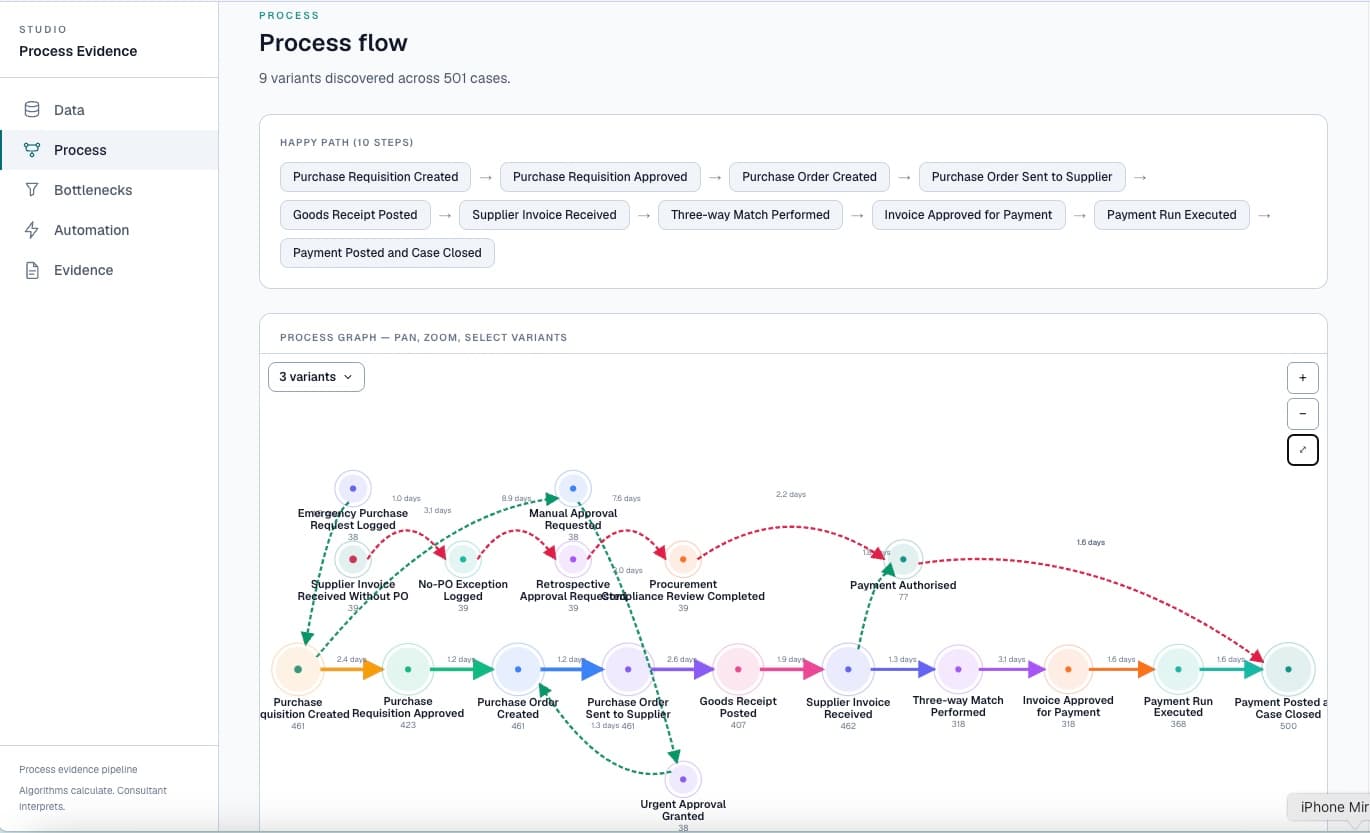
The animated process map shows how work actually moves through the organisation, including variants, friction points, delays and exception patterns. This is where evidence-led discovery becomes visible.
For clients who want to understand the platform behind the method, visit Lanthra.
This link opens an external website: lanthra.co.uk
Visit LanthraCaptures business context, maturity, readiness, pain points, priorities and transformation hypotheses before or alongside data analysis.
Provides the process evidence lens: what data is needed, where it may sit, how it should be handled and how evidence can be collected with governance and control.
Analyses process evidence to identify variants, bottlenecks, delays, rework, SLA breaches, manual effort, value leakage and transformation opportunities.
Product views
These screens demonstrate the type of actionable intelligence Lanthra brings into an AI-led transformation conversation: process mining, value leakage, executive decision support and prioritised AI opportunities.
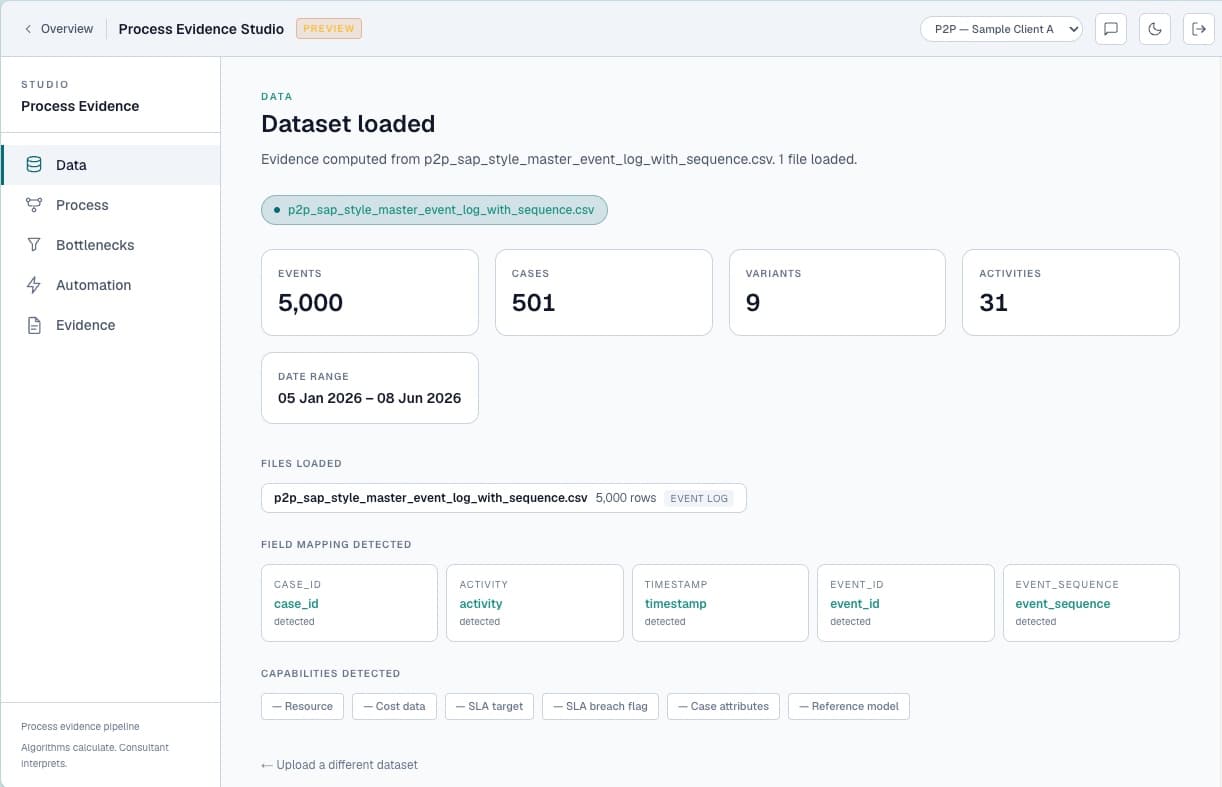
Turns process evidence and business context into an executive view of transformation priorities, risks and opportunity areas.
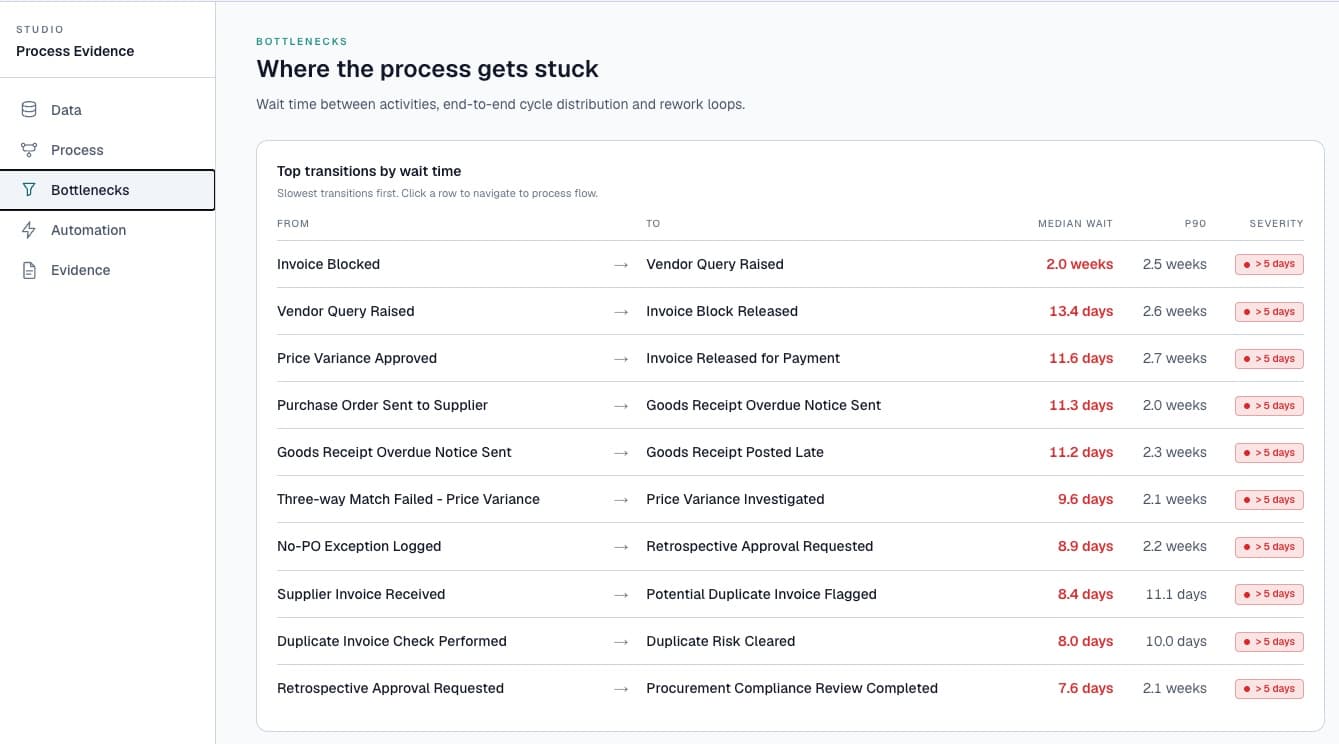
Quantifies the operational impact of delays, rework, manual activity, SLA breaches and avoidable process variation.
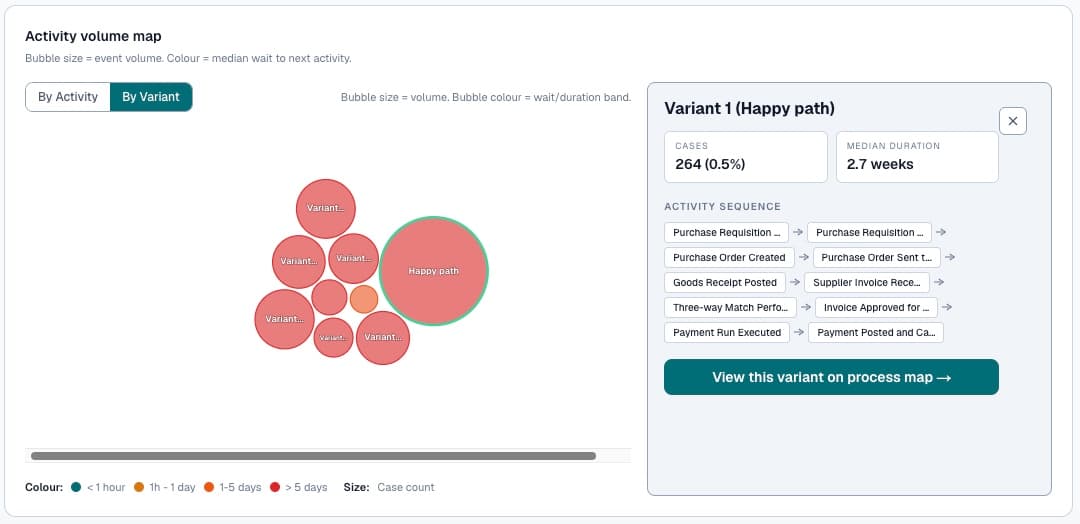
Helps prioritise AI, automation and process redesign opportunities based on evidence, feasibility and business value.
Start with the operating problem, stakeholder priorities, transformation hypotheses, maturity signals and constraints. AI is not treated as a tool looking for a problem.
Use process evidence, operational data and structured context to show how work actually happens, where it slows down and where value is leaking.
Use process intelligence, variant analysis, throughput, cycle time, waiting time, bottlenecks, rework and SLA patterns to create a defensible view of operational reality.
Convert delays, manual activity, avoidable rework, exceptions and failed handoffs into financial and operational impact so leaders can see where intervention is worth funding.
Identify which opportunities should be addressed through AI, workflow automation, process redesign, data improvement, governance change or operating model intervention.
Produce a prioritised transformation backlog, executive narrative, delivery roadmap and action recommendations that can be taken into governance, funding and mobilisation.
Lanthra is not positioned as a separate software licence when I am engaged. It is part of the engagement model: a practical accelerator for discovery, due diligence, process intelligence and AI-led transformation planning.
AI transformation cannot scale without governance. The Lanthra Method treats responsible AI, ethical adoption, security-by-design, data minimisation, role-based access, auditability and enterprise controls as part of the design, not an afterthought.
This means the conversation is not just about what AI can do. It is also about what should be automated, what should remain human-led, where controls are needed and how adoption can be scaled without creating unmanaged risk.